Hurricane Plumbing Checklist for Jupiter, FL Homes
A short, practical list for the plumbing side of storm prep: what to do before the storm, during a watch, and once the water comes back.
The Five Things That Matter Most
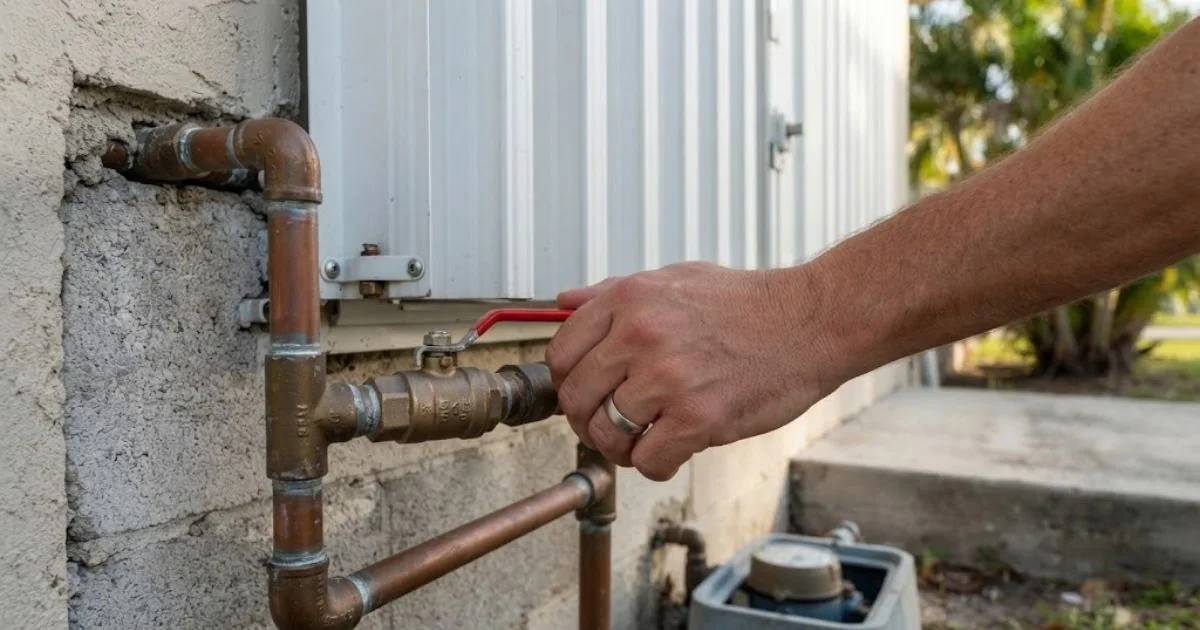
Know where your main water shutoff is and make sure it turns. Shut it off if you evacuate. Do not run water or flush toilets if sewage could back up. After the storm, check for leaks when pressure returns, and follow any boil-water notice exactly.
That covers most of the plumbing risk in a hurricane. The rest of this list adds the details for Jupiter's two utilities, septic homes, and the water heater.
What to Do and When
Spread the work out so it is not all done in the last 24 hours.
| When | Task | Why |
|---|---|---|
| Before the season starts | Find and test the main shutoff and replace a stuck valve | A seized valve fails when you need it. |
| Before the season starts | Check hose bibs, supply lines, and the water heater area for leaks | Small leaks grow in a storm. |
| 48 hours before landfall | Fill bathtubs and containers with water for flushing and cleaning | Water service may be interrupted. |
| When evacuating | Close the main shutoff and switch off the water heater | A burst line in an empty house floods it. |
| After the storm | Inspect before restoring water and watch for pressure surges | Weakened lines can fail when pressure returns. |
Pipe Failed During the Storm?
Shut the main valve first, then phone the emergency line.
What Jupiter's Storm History Teaches
Hurricane Frances passed in September 2004 with an estimated peak gust of 91 mph at Jupiter Inlet, according to the National Weather Service. Jeanne followed on September 26 and brought locally severe rainfall flooding to Jupiter and Palm Beach Gardens. Both made landfall on Hutchinson Island, about two miles apart.
The plumbing lessons were practical. Wind and falling trees strained buried lines, rain overloaded drains, and water quality notices followed damaged mains. A house that had been checked before the storm handled it better than one with an old valve and a bad fitting.
Water, Sewer, and Septic Tips
Know your utility
Jupiter water comes from the Town, and sewer comes from the Loxahatchee River District. Septic homes have neither.
Limit use in heavy rain
Avoid long showers and laundry when drains are overloaded.
Septic homes
Switch off the well pump breaker if you evacuate and avoid heavy water use when the ground is saturated.
Watch the low drains
A gurgling floor drain or toilet signals a stressed line, so stop running water.
Boil-Water Notices and Pressure Surges
The Town of Jupiter posts boil-water notice information on its utilities site. If a notice is issued, follow it before drinking, cooking, brushing teeth, or making ice. Private wells are not covered by Town notices, so owners should consider testing the well after flooding.
When service returns, pressure can surge through lines weakened by wind or age. Open a few taps, check under sinks and around the water heater, and watch the meter with everything off. A moving meter means a new leak.
If Something Failed
A split pipe falls under repair of a failed supply line, and a damaged tank is a tank repair call. Water that has already spread is covered under water mitigation, which starts drying in the first hours.
On the Martin County side, the Hobe Sound page explains how utilities and permits differ.
The Water Heater Before and After
If you evacuate, consider switching off power or gas to the water heater and closing its cold-water supply. A full tank holds a few dozen gallons, and some utilities and plumbers suggest it as an emergency supply of non-drinking water if the house is occupied and the tank is intact.
After the storm, check the area around the heater for dampness, rust, and a dripping relief valve. A heater that was fine before a power surge can fail afterward, and the heater replacement page explains the permit and sizing steps.
Hose Bibs, Irrigation, and the Pool
Turn off and drain accessible outdoor spigots and irrigation valves before a storm, and shut off pool fill lines. Flooded yards can submerge backflow devices, so ask a tester whether an irrigation device needs a check after a flood, and keep up with any notice from the Town.
Debris in the yard can also break exposed pipes and fittings. Walk the property after the storm and look for wet spots, which can mean a broken line below ground.
Gas Lines and Standby Generators
If you shut off the gas before the storm, do not turn it back on yourself. Have the utility or a qualified contractor do it after inspecting the system. If you smell gas at any time, leave and call 911.
Standby generators draw a lot of gas, and a poorly sized line is a common problem. The gas line installation and repair page explains sizing, permits, and testing.
Small Habits That Help Every Season
Keep a flashlight and a basin wrench near the main shutoff, and label the valve with a bright tag so anyone in the house can find it. Walk the house once a year with a notepad and list every shutoff under sinks and behind toilets, since stuck ones are common after years of disuse.
If you travel often, a water shutoff valve with leak sensors can alert you to a problem while you are away. It is an add-on, not a requirement, and it does not replace knowing where the manual shutoff is.
Document and Report
Take dated photos of damage and the source before cleanup. Under Florida Statutes 627.70132, a policyholder has one year to give notice of a new property claim, so report early. Standard homeowners policies generally do not cover flood, so check if you carry a separate flood policy.
Hurricane Plumbing Checklist Questions From Jupiter
If you evacuate, yes. Closing the main shutoff and switching off the water heater limits damage from a burst line.
A utility instruction to boil water before drinking or cooking because it may be contaminated. Follow it exactly until the utility lifts it.
Pressure can surge through lines weakened by wind or age, which can open small cracks and loose fittings.
Not automatically. Watch for slow drains, sewage smells, or wet ground, and call if you see them.
Standard policies generally exclude flood. Wind-driven rain and sudden pipe failures may be covered, so ask your agent.